
21 Sep Why Every Unnecessary Patient Transfer Carries Risk — And How Portable X-Ray Eliminates It
Reducing Patient Transfer Risks with Portable X-Ray: Safer Diagnostic Imaging at the Bedside
Every time a vulnerable patient is moved for an X-ray examination, there is more at stake than simply getting from one place to another. For elderly patients, people recovering from surgery, individuals with limited mobility and those living with chronic health conditions, each transfer introduces additional physical, clinical and emotional risks. Moving between beds, wheelchairs, vehicles and hospital departments can increase discomfort, contribute to fatigue, heighten anxiety and, in some cases, increase the likelihood of falls or further injury. Modern portable X-ray technology is changing this approach by bringing professional diagnostic imaging directly to the patient, allowing high-quality X-ray examinations to be completed safely at the bedside while reducing unnecessary movement. Across Auckland, Hamilton and parts of the Waikato, this approach is helping healthcare providers deliver safer, more efficient care without compromising diagnostic quality.
Portable X-ray is no longer simply a convenient alternative to travelling to a hospital—it has become an important part of safer healthcare delivery. By reducing unnecessary patient transfers, healthcare professionals can maintain continuity of care, minimise disruption and obtain accurate diagnostic images sooner, allowing clinical decisions to be made more quickly. This benefits not only patients but also carers, aged care providers and the wider healthcare system by reducing delays and making better use of valuable resources. If you are looking for a safer way to access professional bedside diagnostic imaging, Portable X-Ray Services provides experienced radiographers, advanced digital X-ray technology and dependable mobile imaging across Auckland, Hamilton and parts of the Waikato, delivering high-quality care where patients need it most.
Why can moving a patient be more dangerous than many people realise?
What physical risks are created when frail or injured patients are transferred?
Transporting a patient for an X-ray examination may appear to be a routine part of healthcare, but for many people it involves a series of physical movements that can place additional strain on the body. Elderly patients, people recovering from surgery, individuals with fractures, and those with limited mobility often require assistance to move from a bed to a wheelchair, into a vehicle, onto another trolley and finally onto an imaging table before the entire process is repeated for the return journey. Every transfer increases the potential for discomfort, fatigue and accidental injury, particularly when the patient is already experiencing pain or reduced physical stability. For healthcare professionals and carers, each manual handling task must also be performed safely to protect both the patient and those providing assistance.
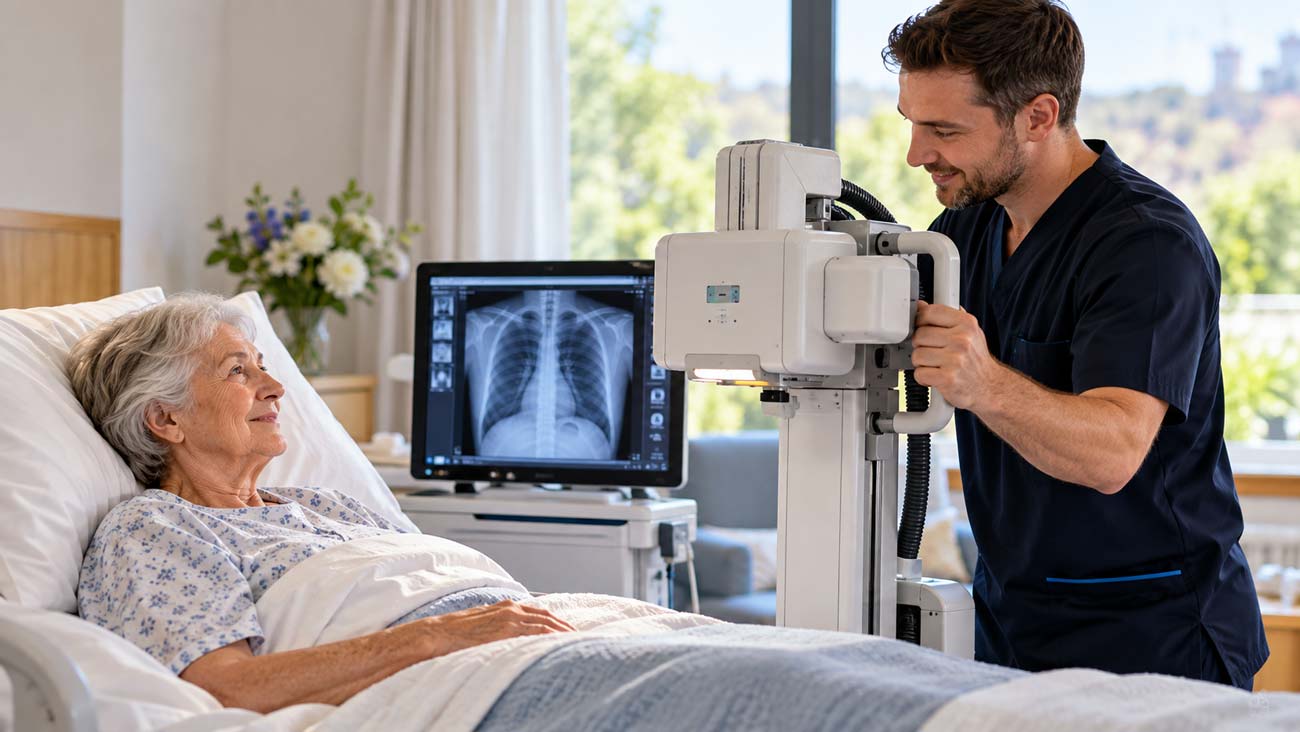
Portable X-ray technology removes many of these unnecessary movements by bringing professional diagnostic imaging directly to the bedside. Experienced radiographers use advanced digital radiography equipment to perform high-quality X-ray examinations wherever the patient is receiving care, reducing the need for repeated lifting, repositioning and transportation. This not only supports safer patient handling but also helps preserve dignity and comfort throughout the examination. Patients who are unable to travel or who would find transport physically demanding can receive essential diagnostic imaging while remaining in a familiar environment, allowing healthcare providers to obtain accurate diagnostic images without exposing the patient to avoidable transfer-related risks.
How does patient movement affect comfort, anxiety and recovery?
Physical movement is only one part of the challenge. Travelling for diagnostic imaging can also have a significant emotional and psychological impact, particularly for patients living with dementia, cognitive impairment or chronic illness. Leaving familiar surroundings, waiting in busy healthcare environments and undergoing multiple transfers can increase confusion, anxiety and fatigue. For patients recovering from surgery or serious illness, even relatively short journeys may interrupt rest, increase pain and make recovery more difficult. These factors can influence the overall patient experience long before the X-ray examination actually begins.
Keeping diagnostic imaging close to the patient creates a calmer and more supportive healthcare experience. Bedside imaging allows patients to remain with familiar carers and healthcare professionals while reducing unnecessary disruption to their normal care routine. This continuity is especially valuable in aged care environments, where maintaining consistency and minimising stress can contribute to better overall wellbeing. For further insight into the patient-centred advantages of bedside imaging, read about how mobile X-ray services reduce patient stress while maintaining diagnostic quality.
Why do multiple patient transfers increase clinical risk?
Many people think of patient transport as a single journey, yet the reality is far more complex. A typical hospital visit often involves multiple transfers between beds, wheelchairs, transport vehicles, waiting areas and imaging equipment. Every additional movement requires careful coordination between healthcare professionals and creates another opportunity for discomfort, loss of balance or complications for patients with fragile bones, respiratory conditions or limited mobility. Even when every transfer is performed correctly, repeated handling can be physically demanding for both patients and caregivers.
Portable X-ray services simplify this process by eliminating many of these unnecessary steps. Rather than moving the patient through several environments before diagnostic imaging can take place, experienced radiographers bring advanced portable X-ray equipment directly to the bedside. The examination is completed where the patient is already receiving care, reducing handling while supporting timely diagnosis. This approach improves patient safety, helps healthcare providers work more efficiently and reinforces an increasingly important principle in modern healthcare: when appropriate, it is often safer to move the technology rather than the patient.
Why is portable X-ray changing how healthcare professionals think about patient safety?
How does bedside imaging remove unnecessary handling?
One of the greatest strengths of portable X-ray is its ability to eliminate many of the manual handling tasks traditionally associated with diagnostic imaging. Every time a patient is lifted, repositioned or transferred, there is a degree of risk for both the patient and the healthcare professionals assisting them. Patients experiencing pain, recovering from surgery or living with reduced mobility can find repeated handling physically exhausting, while carers and nursing staff must also manage the risk of musculoskeletal injuries during transfers. By bringing advanced portable X-ray equipment directly to the bedside, the need for multiple movements is significantly reduced, allowing the examination to be completed with far less disruption.
Reducing patient handling also improves the efficiency of healthcare delivery. Instead of coordinating transport, arranging escorts and preparing for several transfers, healthcare professionals can continue providing care while the radiographer performs the X-ray examination in the patient’s existing environment. Modern digital radiography allows high-quality diagnostic images to be captured quickly, enabling clinical decisions to be made without unnecessary delays. This patient-first approach helps create a safer and more streamlined workflow while reducing the physical demands placed on everyone involved in the patient’s care.
Why is keeping the patient in familiar surroundings so valuable?
Healthcare is not only about diagnosing illness or injury; it is also about creating an environment that supports recovery. Remaining in familiar surroundings can have a positive effect on a patient’s comfort, confidence and overall wellbeing, particularly for elderly people or those living with dementia, neurological conditions or long-term illnesses. Travelling to a hospital for an X-ray may involve unfamiliar people, noisy waiting areas and changes to normal routines, all of which can contribute to stress and confusion. Portable X-ray services remove these challenges by allowing essential diagnostic imaging to take place where the patient already feels safe and supported.
Maintaining familiar surroundings also helps preserve continuity of care. Patients remain with the carers and healthcare professionals who know their medical history, communication needs and daily routine, creating a smoother experience from beginning to end. Families also gain reassurance knowing their loved one does not need to leave their care environment unless further treatment is genuinely required. This shift towards healthcare delivered around the patient rather than expecting the patient to adapt to the healthcare system reflects an important evolution in modern medical practice. Learn more about bringing diagnostic imaging directly to the patient and why it is changing the way essential healthcare services are delivered.
How does portable imaging support better clinical decision-making?
Timely access to diagnostic imaging allows healthcare providers to make informed clinical decisions sooner. When an X-ray examination can be completed without organising transport or waiting for hospital imaging availability, clinicians receive the information they need more quickly to assess injuries, investigate symptoms or monitor a patient’s condition. Earlier diagnosis often leads to earlier treatment, helping reduce uncertainty for patients while supporting more effective healthcare planning. This is particularly valuable in aged care and community healthcare settings where prompt access to diagnostic information can significantly influence ongoing patient management.
Portable X-ray also improves communication between radiographers, referring healthcare providers and those directly responsible for the patient’s care. Digital images are produced efficiently using advanced portable radiography technology and become part of the patient’s overall clinical assessment without the disruption associated with unnecessary transfers. Rather than viewing mobile imaging simply as a convenient service, many healthcare professionals now see it as an important clinical tool that supports safer decision-making, improves workflow and keeps patient wellbeing at the centre of every diagnostic examination.
Which patients benefit most from avoiding unnecessary transfers?
Why are elderly patients at greater risk during transport?
Older adults are among the patients who benefit most from portable X-ray because even routine movement can present significant challenges. Ageing often brings reduced muscle strength, decreased balance, osteoporosis and a greater likelihood of chronic health conditions, all of which increase the risk associated with transferring a patient between beds, wheelchairs and transport vehicles. A journey that may appear straightforward can quickly become physically exhausting, particularly for someone already coping with pain, illness or a recent fall. In many situations, the greatest risk is not the X-ray examination itself but the repeated handling required to reach the imaging department.
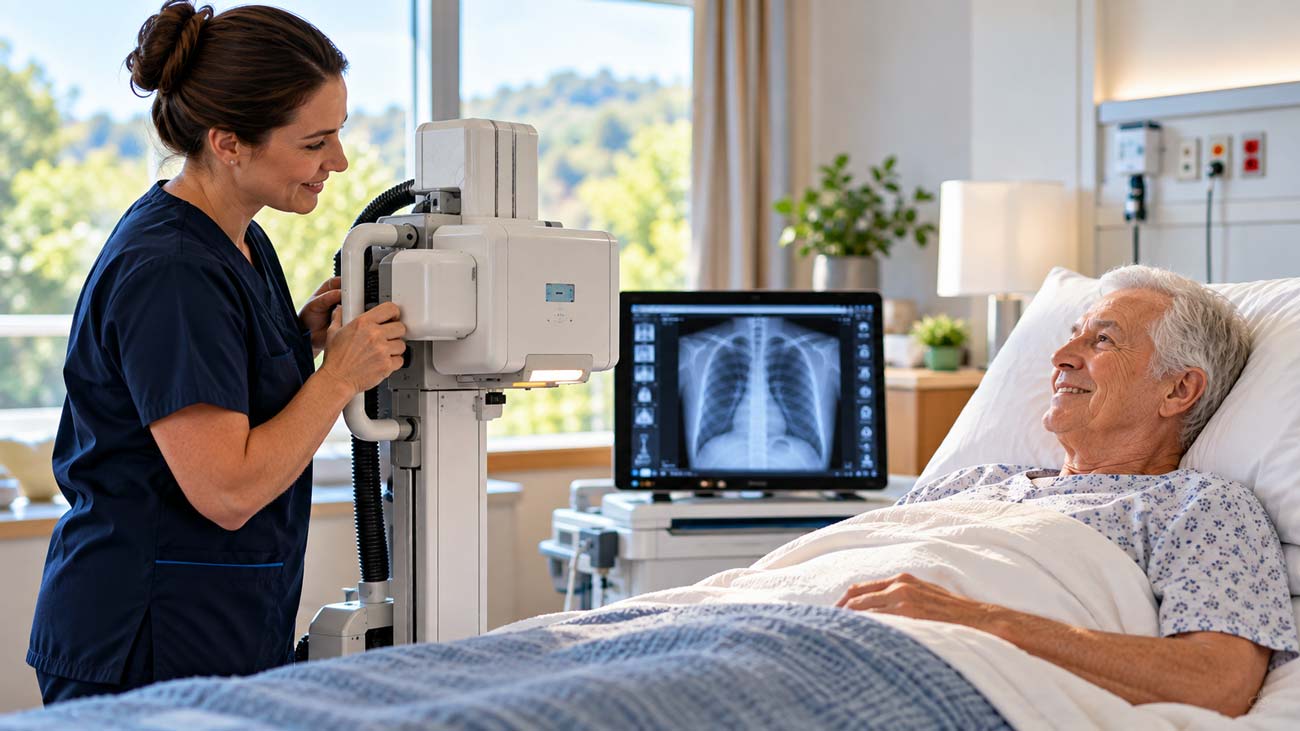
Portable X-ray technology removes much of this unnecessary movement by allowing experienced radiographers to perform high-quality diagnostic imaging where the patient already receives care. Patients remain in familiar surroundings while advanced digital radiography produces the accurate diagnostic images required by their healthcare provider. This approach reduces fatigue, lowers the likelihood of falls and supports a more comfortable experience throughout the patient’s healthcare journey. By focusing on minimising avoidable movement, portable imaging contributes to safer outcomes for elderly patients while preserving their dignity and independence wherever possible.
How does portable X-ray support patients living with chronic illness?
Many people living with chronic illness face ongoing mobility challenges that make travelling for medical appointments both physically and emotionally demanding. Patients with advanced arthritis, respiratory disease, neurological conditions, heart disease or long-term disability may find that even short journeys increase pain, breathlessness or fatigue. Some rely on oxygen therapy, mobility aids or continuous support from carers, making transportation considerably more complex than simply attending an appointment. Mobile X-ray services provide an alternative by delivering essential diagnostic imaging directly to the patient, avoiding unnecessary travel while ensuring important clinical information can still be obtained.
This approach also helps maintain stability for patients whose daily routines are carefully managed around medication schedules, rehabilitation programmes or ongoing nursing care. Rather than interrupting treatment to organise transport, portable imaging integrates into the patient’s existing care plan with minimal disruption. Healthcare professionals can continue monitoring and supporting the patient while the radiographer completes the examination using advanced portable X-ray equipment. This coordinated approach improves continuity of care and reinforces the growing role of healthcare delivered where patients feel safest and most comfortable.
When is bedside imaging the safest option?
There are many situations where bedside imaging represents the safest and most practical solution for obtaining essential diagnostic information. Patients recovering from major surgery, receiving palliative care, managing advanced illness or requiring high levels of nursing support may not tolerate transportation well. In these circumstances, moving the patient may create unnecessary clinical risk while offering little additional benefit compared with performing the examination where the patient is already being cared for. Portable X-ray technology enables healthcare providers to obtain accurate diagnostic images while avoiding many of the physical demands associated with hospital transfers.
Bedside imaging is also valuable when continuity of care is particularly important. Patients remain connected to familiar healthcare professionals, carers and support systems throughout the diagnostic process, helping reduce anxiety while maintaining consistent clinical oversight. Modern portable radiography provides high-quality diagnostic imaging without requiring patients to leave their care environment, supporting informed medical decision-making with less disruption. For more information about why bedside imaging has become an increasingly important part of patient-centred healthcare, explore why in-home portable X-rays are the smart solution for vulnerable patients and their healthcare teams.
What are the hidden operational costs of moving a patient?
How much staff time is required for one hospital transfer?
When people think about transporting a patient for an X-ray examination, they often focus on the journey itself rather than the number of people involved behind the scenes. Organising a hospital transfer can require nurses, carers, transport staff and administrative personnel to coordinate schedules, prepare documentation, assist with lifting and repositioning, and supervise the patient throughout the process. Depending on the patient’s condition, more than one staff member may be needed to ensure the transfer is completed safely. This commitment of time and resources can quickly add up, particularly in busy healthcare environments where every member of staff plays a critical role in delivering patient care.
Portable X-ray services help reduce this operational burden by bringing advanced diagnostic imaging directly to the patient. Instead of coordinating multiple transfers and escorting patients through different healthcare environments, care teams can continue focusing on treatment while the radiographer performs the X-ray examination on-site. This streamlined approach reduces interruptions to daily workflows, makes better use of valuable staff time and allows healthcare professionals to devote more attention to patients who require direct clinical support. The result is a more efficient healthcare process that benefits both patients and those responsible for their ongoing care.
Why do unnecessary transfers affect the whole healthcare system?
Every unnecessary patient transfer has an impact that extends beyond the individual receiving care. Transporting patients for diagnostic imaging can contribute to increased demand on hospital transport services, create additional pressure on waiting areas and occupy valuable clinical resources that could otherwise be directed towards patient treatment. Delays in transport, scheduling or imaging availability may also extend the time it takes for healthcare providers to receive the diagnostic information they need, affecting treatment decisions and overall workflow efficiency. While each individual delay may seem minor, the cumulative effect across a busy healthcare system can be significant.
Portable X-ray technology helps address many of these challenges by reducing the need for unnecessary movement while allowing high-quality diagnostic imaging to take place where the patient already receives care. This not only improves patient safety but also supports more efficient use of healthcare resources by reducing transport requirements and helping clinicians obtain diagnostic information sooner. Healthcare systems increasingly recognise that moving technology to the patient, rather than moving the patient to the technology, can improve both operational efficiency and patient-centred care. For further insight into this evolving approach, explore the future of portable radiology services and how mobile imaging is supporting faster, more accessible healthcare.
How can portable X-ray improve workflow for healthcare providers?
Efficient workflows are essential in every healthcare environment, particularly where staff are caring for patients with complex medical needs. Portable X-ray services simplify the diagnostic process by eliminating many of the logistical challenges associated with organising hospital-based imaging. Rather than arranging transport, coordinating escorts and managing patient transfers, healthcare providers can request bedside imaging that fits within the patient’s existing care schedule. This reduces interruptions while ensuring diagnostic imaging becomes a seamless part of everyday clinical practice.
Improved workflow also benefits communication between radiographers, nursing staff and referring healthcare providers. Digital diagnostic images are produced efficiently using advanced portable radiography equipment, allowing clinicians to review findings promptly and continue planning patient care without unnecessary delays. As healthcare continues to evolve towards more patient-centred models, portable X-ray has become more than a convenient alternative—it is a practical solution that improves efficiency, supports safer clinical practice and enables healthcare professionals to deliver high-quality care with fewer operational obstacles.
How does portable X-ray reduce healthcare risks without compromising image quality?
Can portable imaging produce hospital-quality diagnostic images?
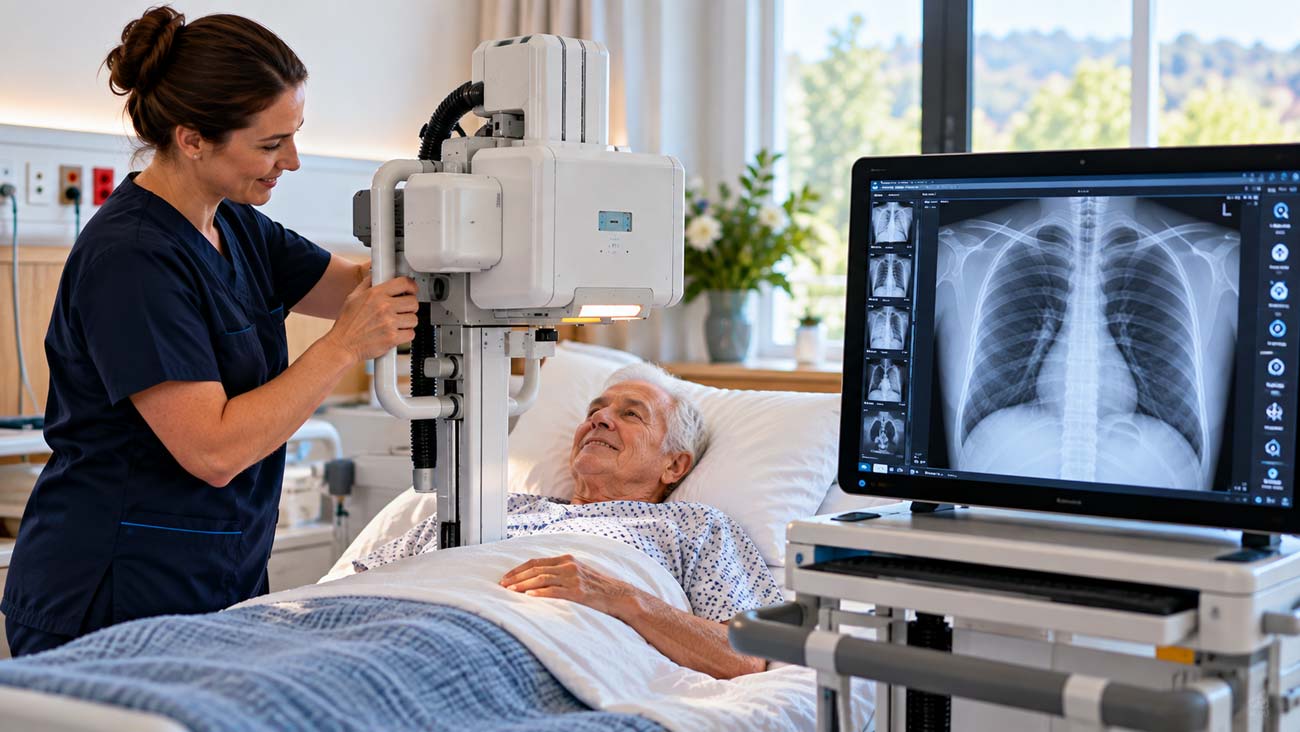
One of the most common questions about mobile X-ray services is whether portable equipment can produce diagnostic images comparable to those obtained within a hospital radiology department. Thanks to significant advances in digital radiography, the answer is yes for a wide range of routine diagnostic examinations. Modern portable X-ray systems incorporate sophisticated digital detectors, intelligent image processing and highly refined exposure controls that enable experienced radiographers to capture clear, detailed diagnostic images in homes, aged care facilities and other healthcare settings. Although the equipment is designed for mobility, it is built to meet the same professional expectations for image quality that clinicians rely on when making important healthcare decisions.
The quality of an X-ray examination depends not only on the technology but also on the expertise of the radiographer performing it. Careful patient positioning, correct exposure selection and a thorough understanding of radiographic technique all contribute to producing accurate diagnostic images. Portable imaging allows these professional standards to be maintained while eliminating many of the risks associated with unnecessary patient transport. As a result, healthcare providers can obtain reliable diagnostic information without compromising patient comfort, safety or clinical confidence.
How do radiographers maintain safety during bedside examinations?
Professional radiographers follow established radiography protocols designed to protect patients, carers and healthcare professionals during every bedside X-ray examination. Before imaging begins, the patient’s referral is confirmed, the examination is explained and the surrounding area is assessed to ensure the portable X-ray equipment can be used safely. Appropriate positioning techniques and radiation safety procedures are then applied to obtain the required diagnostic images while minimising radiation exposure. These well-established practices ensure that mobile X-ray examinations are completed efficiently while maintaining the highest professional standards.
Safety also depends on adapting each examination to the patient’s individual circumstances. Some patients require additional support because of limited mobility, recent surgery or underlying medical conditions, while others may need assistance from carers during positioning. Experienced radiographers work closely with healthcare providers to ensure every examination is tailored to the patient’s needs without compromising image quality. This careful, patient-focused approach has become one of the defining strengths of modern portable radiology and is a key reason why bedside imaging continues to grow in importance across a wide range of healthcare environments.
Why has portable X-ray become an essential part of modern healthcare delivery?
Healthcare is increasingly focused on delivering the right care in the right place at the right time. Portable X-ray reflects this shift by bringing essential diagnostic imaging directly to patients instead of expecting vulnerable individuals to travel for examinations that can safely be performed at the bedside. This approach reduces unnecessary handling, improves access to timely diagnosis and supports better continuity of care, particularly for elderly patients, those with limited mobility and people recovering from illness or surgery. By reducing avoidable patient transfers, mobile imaging contributes to safer healthcare delivery while helping clinicians make informed treatment decisions more efficiently.
Advances in portable X-ray technology continue to strengthen its role within modern healthcare. High-quality digital imaging, experienced radiographers and streamlined clinical workflows have transformed portable radiology into far more than a convenient alternative to hospital-based imaging. It has become a valuable clinical resource that improves patient safety, enhances operational efficiency and supports better healthcare outcomes. To see how these advances are changing everyday patient care, explore the hidden benefits of bringing X-ray technology directly to the patient, where the wider impact of bedside diagnostic imaging is explored in greater detail.
Key Points
Reducing unnecessary patient transfers is about much more than convenience—it is about improving safety, protecting vulnerable people and delivering healthcare in a way that places the patient’s wellbeing first. Every unnecessary move has the potential to increase discomfort, fatigue and clinical risk, particularly for elderly patients, people recovering from surgery and those with limited mobility or chronic illness. Portable X-ray technology addresses these challenges by bringing high-quality diagnostic imaging directly to the bedside, allowing experienced radiographers to perform professional X-ray examinations without requiring patients to leave the environment where they are already receiving care. This approach supports faster clinical decision-making, reduces manual handling, improves continuity of care and helps healthcare professionals make more efficient use of valuable time and resources. Learn more about the benefits of professional mobile X-ray services and how bedside imaging is helping transform safer healthcare delivery.
As healthcare continues to evolve, the focus is increasingly shifting towards bringing essential services directly to patients rather than moving patients through complex healthcare systems. Portable X-Ray Services delivers advanced digital X-ray imaging across Auckland, Hamilton and parts of the Waikato, providing high-quality bedside diagnostic imaging for patients who are unable to travel or who would benefit from remaining in familiar surroundings. With experienced radiographers, modern portable X-ray technology and a strong commitment to patient safety, every examination is performed with professionalism, compassion and clinical precision. The result is a healthcare service that not only delivers accurate diagnostic images but also reduces avoidable risks, improves patient comfort and supports better healthcare outcomes for patients, carers and healthcare providers alike.